


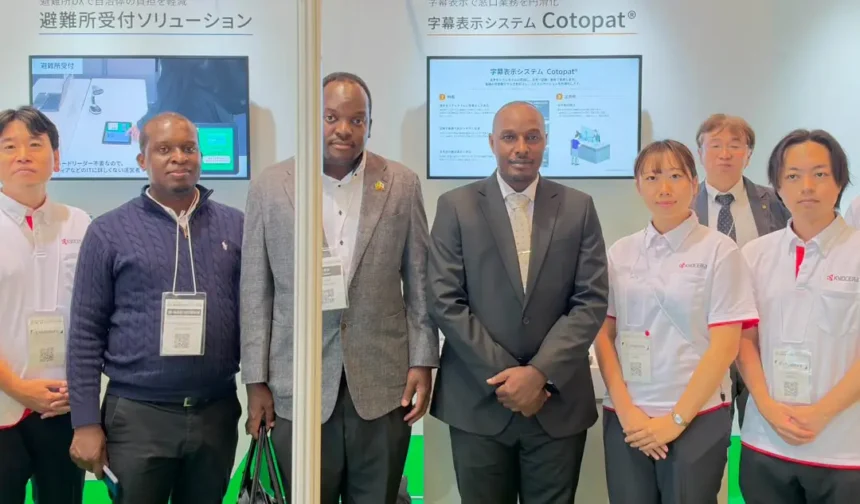
Uganda is exploring new opportunities to strengthen its science, technology and innovation sector through partnerships with Japanese research institutions, technology companies and government leaders, with a focus on turning scientific knowledge into practical solutions, creating jobs and supporting industrial development.
The engagements took place during a visit to Japan by the Minister for Science, Technology and Innovation, Hon. Eng. Jonard Asiimwe Akiiki, who represented Uganda in discussions on technological advancement, research collaboration and the development of innovation-driven industries.
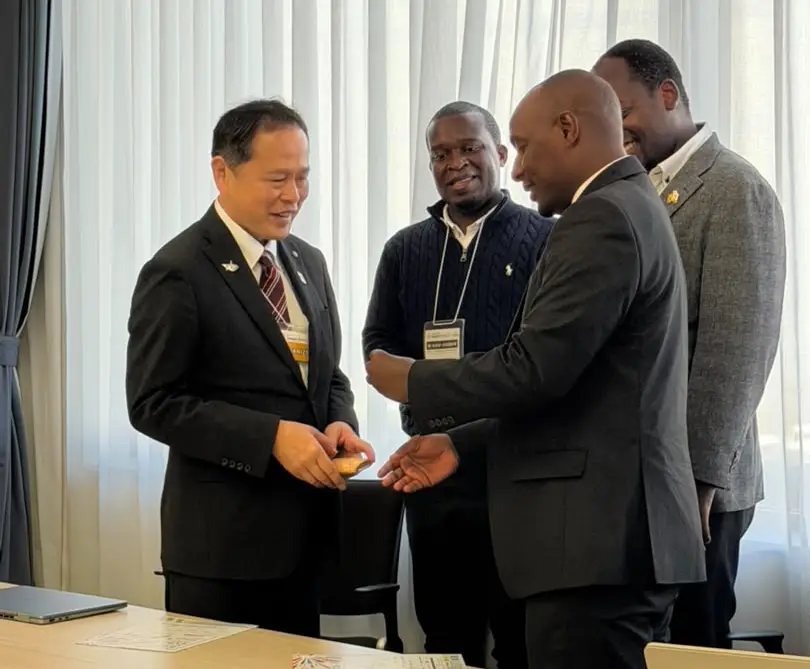
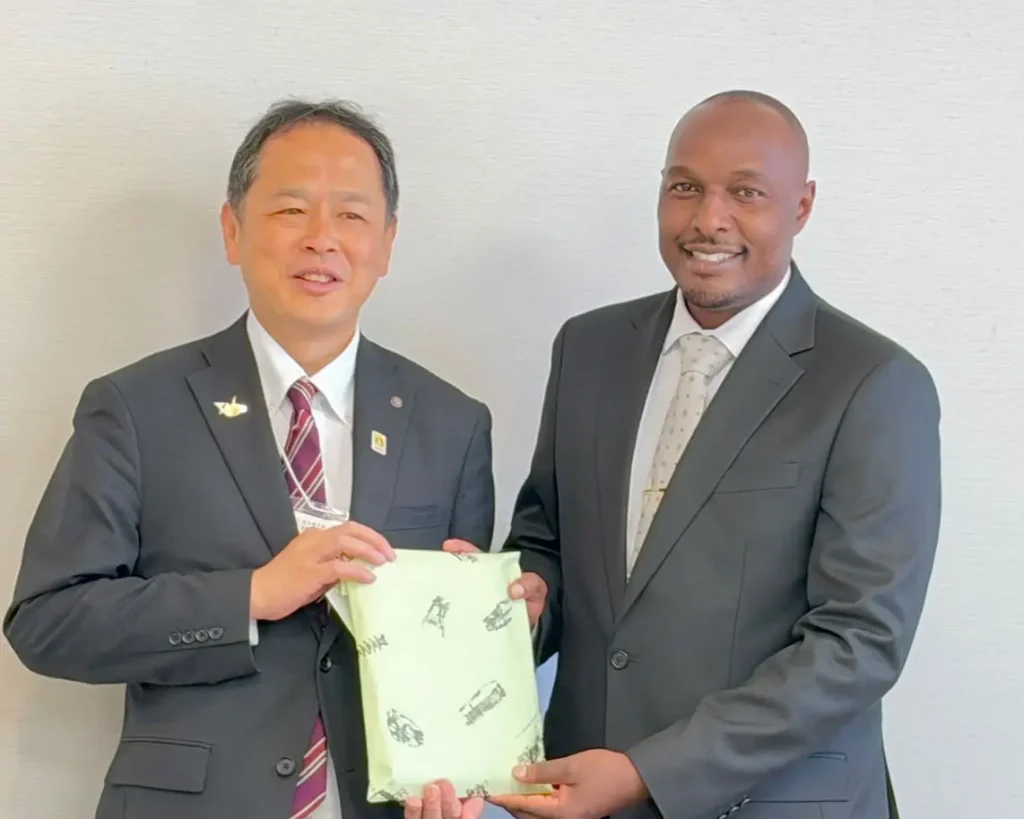
During the visit, the Minister participated in engagements at the Kyoto Smart City Expo in Keihanna Science City, where he was warmly received by Kyoto Prefecture Vice Governor Kazuya Suzuki. He also held discussions with Kyocera, the Advanced Telecommunications Research Institute International (ATR) and the Kansai Research Institute (KRI), exploring opportunities to strengthen cooperation between Uganda and Japan.
The engagements focused on how Uganda could learn from Japan’s experience in developing technology, supporting scientific research and building innovation ecosystems that connect universities, businesses, government institutions and entrepreneurs.

For Uganda, the conversations come at a time when science and technology are becoming increasingly important to economic competitiveness. From manufacturing and renewable energy to artificial intelligence and digital engineering, countries are investing in knowledge and innovation to improve productivity, develop new industries and create opportunities for their populations.
The challenge for Uganda is to ensure that its investment in science, technology and innovation produces practical benefits for ordinary citizens, rather than allowing research and new ideas to remain confined to laboratories and academic institutions.

At the Kyoto Smart City Expo, Hon. Eng. Jonard Asiimwe Akiiki engaged with government officials and innovation-driven companies to explore areas of cooperation that could support Uganda’s development priorities. The discussions provided an opportunity to exchange ideas, learn from Japan’s experience and examine how technological innovation can contribute to better public services, stronger industries and improved living standards.
The engagement with Kyocera focused on potential cooperation in semiconductor research, renewable energy and materials science. The company, widely known by many consumers for its printers, has a broader technological presence that includes advanced ceramics, electronic components, semiconductor-related technologies and industrial products.

These areas are relevant to Uganda’s ambitions to strengthen its research capacity and expand its participation in technology-driven industries. Semiconductors are essential components in many electronic devices, while materials science contributes to the development of products used in manufacturing, construction and engineering. Renewable energy technologies also offer opportunities to explore solutions that support electricity access and productive economic activity.
Discussions with the Kyocera team explored the possibility of a more structured partnership between the company and Uganda, particularly in applied research, technology transfer and skills development. The objective is to identify ways of connecting research institutions with industry so that scientific knowledge can be translated into practical applications.

For Uganda’s young people, such cooperation could help strengthen technical knowledge and expose researchers and entrepreneurs to international expertise. However, the benefits will depend on how potential areas of cooperation are developed and implemented.
The Minister also visited the Advanced Telecommunications Research Institute International in Keihanna Science City, where he was welcomed by Dr Hiroyuki Suzuki, Vice President and Head of the Innovation Co-creation Unit.
ATR conducts research in fields including information and communication technology, artificial intelligence, robotics, neuroscience and human-machine interaction. The engagement focused on opportunities to strengthen cooperation in advanced technologies, research and innovation.
One of the initiatives discussed was KGAP+, a programme that connects international startups with Japanese corporations, mentors and opportunities to test technologies through proof-of-concept projects.
The programme offers a model for helping innovative businesses move from developing an idea to testing its practical application. For startups, access to technical expertise, experienced mentors and established companies can be important in determining whether a product is commercially viable.
Uganda has researchers, entrepreneurs and young innovators seeking solutions to challenges in their communities. However, developing an idea into a successful product often requires access to specialised facilities, technical support, business networks and opportunities to test the solution in real-world conditions.

During the ATR engagement, the parties agreed to pursue a collaborative framework focusing on joint applied research and development, connections between Japanese and Ugandan innovation-driven enterprises, and opportunities for Ugandan innovators to engage with ATR’s wider innovation ecosystem.
If developed into practical initiatives, such cooperation could help strengthen research collaboration, expand professional networks and improve the connection between scientific discoveries and industrial applications.
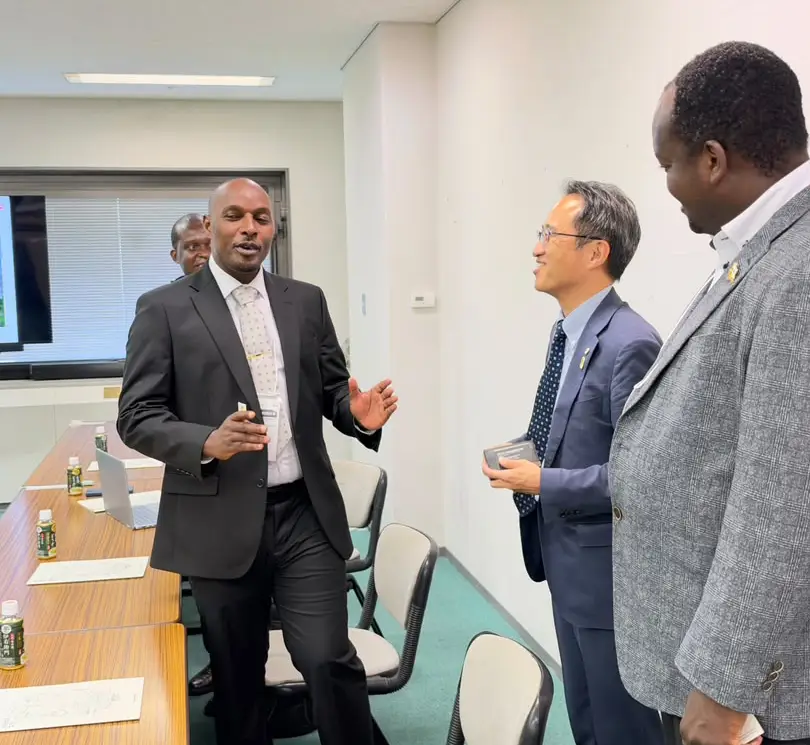
The Minister’s engagements also extended to the leadership of the Kansai Research Institute, led by its Managing Director, Mr Tadahiko Mori, where discussions focused on lessons Uganda could draw from the development and management of Keihanna Science City.
Keihanna Science City offers an example of how research institutions, universities, government, industries, startups and residents can operate within a connected innovation ecosystem. The model brings together different players whose combined expertise can support research, technology development and the growth of innovative businesses.
Rather than treating research as an activity separate from commercial production, the ecosystem creates opportunities for researchers and companies to collaborate, access shared facilities, test new ideas and explore pathways to commercialisation.
This approach is particularly relevant to Uganda’s proposed High-Tech City, an initiative intended to strengthen the country’s science, technology and innovation infrastructure.
During the meeting, the Ugandan delegation requested mentorship and technical support from KRI in developing the proposed High-Tech City and other critical innovation infrastructure.
The discussions covered institutional design, the governance of innovation clusters, investor attraction, the management of shared research facilities and the development of programmes responsive to market needs.
These are important considerations because a successful technology hub requires more than modern buildings and laboratories. It needs effective management, sustainable financing, skilled people, strong institutional relationships and a clear connection between research and the needs of industry.
For example, a university researcher developing a new technology needs opportunities to test its performance and determine whether it can solve a real problem. A startup needs access to expertise, potential customers and business support to turn the technology into a product. An investor needs confidence that the business has a viable market and the potential to grow.
A well-coordinated innovation ecosystem can bring these different participants together, making it easier for ideas to move from research to commercial application.
The lessons Uganda is exploring in Japan could therefore help inform how its proposed High-Tech City is planned, governed and managed. The priority will be to develop an approach suited to Uganda’s circumstances while drawing on relevant international experience.
For the country, the potential benefits extend beyond scientific research. Stronger links between universities, technology companies and industry can help businesses improve productivity, create opportunities for skilled employment and encourage the development of locally relevant products and services.
Young people could also benefit from opportunities to acquire technical skills, participate in research projects and establish businesses based on innovative ideas. As technology continues to reshape industries worldwide, developing these capabilities will be important to Uganda’s ability to compete in the global knowledge economy.
The engagements in Japan highlighted a common priority across the discussions: ensuring that science and technology contribute directly to economic and social development.
For Hon. Eng. Jonard Asiimwe Akiiki, representing Uganda in these engagements provided an opportunity to explore international partnerships that could support the country’s ambitions in research, innovation and industrial development.
The discussions also reinforced the importance of adapting international models to local needs. Japan’s experience can offer valuable lessons, but Uganda’s progress will depend on its ability to develop local expertise, strengthen its institutions and establish partnerships that deliver practical results.
While the engagements identified potential areas of cooperation and support, the specific implementation arrangements for the proposed initiatives will determine how these opportunities translate into tangible outcomes.
The broader ambition is to build a stronger innovation ecosystem in Uganda, where scientific research supports industrial growth, technology companies collaborate with local institutions, startups receive the support they need to develop, and investors can identify viable opportunities.
Such an environment would help connect the country’s research capabilities with the needs of businesses and communities, while creating more opportunities for Ugandans to participate in emerging technology sectors.
The visit to Japan placed Uganda’s proposed High-Tech City and wider innovation agenda within this broader context. The objective is not simply to establish new infrastructure, but to create an environment where knowledge is applied, ideas are developed into products, and innovation contributes to sustainable economic growth.
Ultimately, the success of these efforts will be measured by what they deliver. For Ugandans, that means better services, stronger businesses, new employment opportunities and technologies that address real challenges.
Through continued engagement with international research institutions and technology companies, Uganda is seeking to strengthen the foundations needed to achieve these goals.
The message emerging from the visit is clear: Uganda’s future in science and technology will depend not only on the ideas its people generate, but also on the opportunities they receive to develop those ideas into practical solutions.
By connecting local talent with global expertise and building stronger relationships between research, industry and investment, the country can work towards an innovation ecosystem that creates lasting value for its people and supports its wider development ambitions.


