


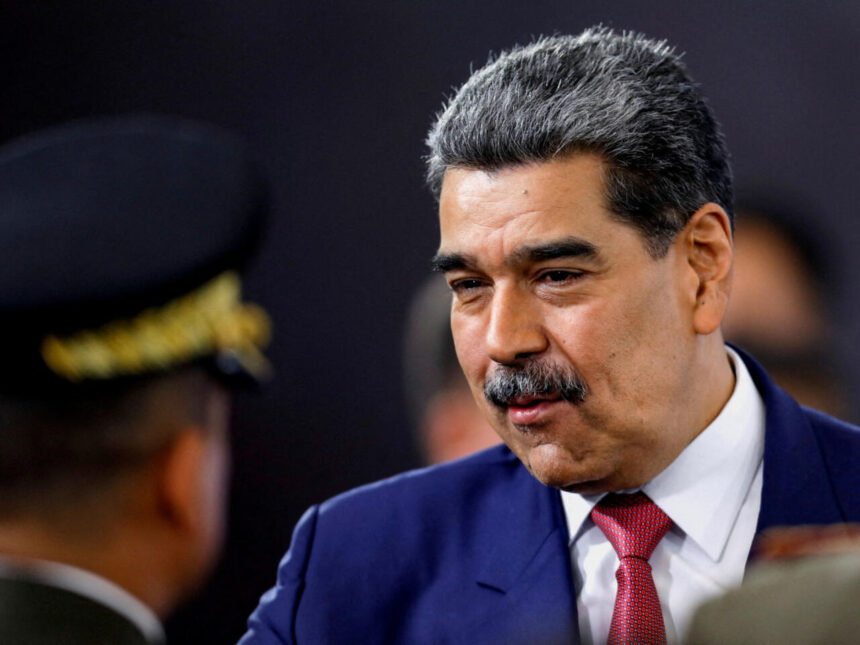
Venezuelan President Nicolás Maduro has been detained by United States military forces following a high-level operation carried out in the capital, Caracas, in a development that has sent shockwaves across Latin America and the wider international community.
According to U.S. officials, the operation was conducted in the early hours of Friday after months of intelligence coordination and planning. It involved targeted military action against strategic security installations believed to be shielding senior members of the Venezuelan leadership. The objective, U.S. authorities said, was to limit resistance and secure access to President Maduro without engaging in prolonged combat.
Specialized U.S. units later moved into central Caracas, where Maduro was located at a heavily guarded compound alongside his wife, Cilia Flores. The area was surrounded, and both were taken into custody. Officials indicated that the arrest was completed without significant confrontation.
Maduro and Flores were subsequently transported out of Venezuelan territory under tight security and flown to the United States. Upon arrival in New York, U.S. judicial authorities confirmed that Maduro would face longstanding federal charges, including allegations linked to narcotics trafficking and organized crime, stemming from indictments issued several years ago.
The U.S. administration described the mission as a law-enforcement and national-security action rather than an act of military occupation. Officials said the decision followed years of diplomatic efforts, economic sanctions, and international pressure that failed to yield political change in Caracas. The operation, they added, was intended to enforce existing legal cases and address activities Washington considers destabilizing to the region.
Political Fallout in Caracas
Inside Venezuela, senior government officials moved swiftly to manage the power vacuum. Vice President Delcy Rodríguez was announced as interim head of state, with authorities citing the need to preserve constitutional continuity and government operations. Venezuelan officials strongly rejected the legitimacy of the U.S. action, insisting that Maduro remains the country’s lawful president under national and international law.
Security was heightened across major cities, while public life in Caracas slowed amid uncertainty. Reactions among citizens were mixed, ranging from shock and fear to guarded optimism about potential political change after years of economic hardship and political turmoil.
International Reaction Divided
Global response to the operation has been sharply divided. Several governments condemned the United States for acting unilaterally and violating Venezuelan sovereignty, warning that the detention of a sitting head of state sets a dangerous international precedent. Others, however, described the move as a decisive step following disputed elections, prolonged economic collapse, and allegations of widespread corruption under Maduro’s leadership.
The United Nations and regional bodies are expected to debate the legal and diplomatic implications of the operation in the coming days, as calls grow for restraint and dialogue to prevent further instability.
Uncertain Road Ahead
As legal proceedings begin in the United States and interim authorities seek to assert control in Caracas, Venezuela’s political future remains uncertain. Analysts say the detention of President Maduro represents one of the most consequential moments in the country’s modern history, with implications that could reshape regional politics and U.S.–Latin America relations for years to come.
What is clear is that the removal of a sitting president under such extraordinary circumstances has opened a new and unpredictable chapter for Venezuela and the wider hemisphere.


