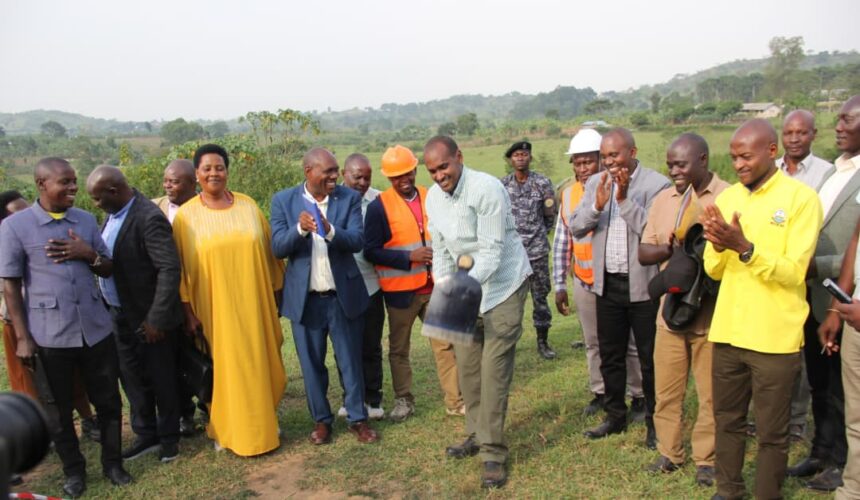
KAMWENGE, Uganda — A major boost to education infrastructure is underway in Kamwenge District following the official groundbreaking of two new seed secondary schools worth nearly Shs7 billion.
The Ugandan government, through the Ministry of Education and Sports, has launched the construction of Bisozi Seed Secondary School and Ntonwa Seed Secondary School in Kibale East Constituency. The initiative forms part of the nationwide Uganda Secondary Education Expansion Project (USEEP), aimed at increasing access to lower secondary education across underserved areas.
Bridging the Distance Gap
For years, students in rural parts of Kamwenge have faced long and often exhausting journeys to access secondary education. The new schools are expected to significantly reduce travel distances for learners in Bisozi, Ntonwa, and surrounding communities.
The groundbreaking ceremony was presided over by key leaders, including Agriculture Minister Frank Tumwebaze and Kamwenge Woman MP Sylvia Bahireira, who emphasized that the investment goes beyond infrastructure — it represents a commitment to equal opportunity.
“This is about ensuring that every child, regardless of where they are born, has access to quality secondary education,” officials said during the event.
Investment Breakdown
Construction of Bisozi Seed Secondary School is valued at approximately Shs3.5 billion, while Ntonwa Seed Secondary School is estimated at just under Shs3.4 billion, excluding VAT.
The facilities will include:
- Modern classrooms
- Administrative blocks
- Staff accommodation
- Science laboratories
- Improved sanitation facilities
The project aligns with the government’s policy of establishing at least one secondary school per sub-county, strengthening the foundation of Universal Secondary Education (USE).
Part of a Wider National Strategy
The Uganda Secondary Education Expansion Project is rolling out 116 new lower secondary schools across the country, particularly targeting districts with limited access and high enrollment pressures. Western Uganda alone is benefiting from dozens of similar projects.
Kamwenge District currently has 86 government primary schools and nearly 200 private primary institutions, yet access to nearby secondary schools has remained limited in certain sub-counties. The addition of these two seed schools is expected to improve transition rates from primary to secondary level and reduce dropout numbers.
Community Optimism
Local leaders and residents have welcomed the development, describing it as long overdue. Community members say the schools will ease financial burdens on families and create safer learning environments for children who previously had to travel long distances.
Government officials have also urged school administrators to ensure transparency and avoid unauthorized fees, maintaining the integrity of free secondary education under USE. Capitation grants are expected to support operational costs once the schools open.
Looking Ahead
While similar projects in neighboring districts have faced delays, authorities in Kamwenge say contractors are already on site and timelines are being closely monitored to ensure timely completion.
For families in Kamwenge, the initiative signals more than new buildings — it marks renewed hope for brighter futures. With improved access to education, thousands of learners are poised to benefit from opportunities that were once out of reach.
As construction begins, the message from government is clear: accessible education remains a cornerstone of Uganda’s development agenda.